

Does Swimming Help Weight Loss?
Swimming is one of the most effective low-impact aerobic exercises. It improves posture, uplifts mood, tones all the body muscles, enhances lung capacity, and increases flexibility and muscle coordination. In fact, swimming can actually help improve your lifestyle. But does it aid weight loss, or is it just a myth? Read on to find out.
Swimming For Weight Loss
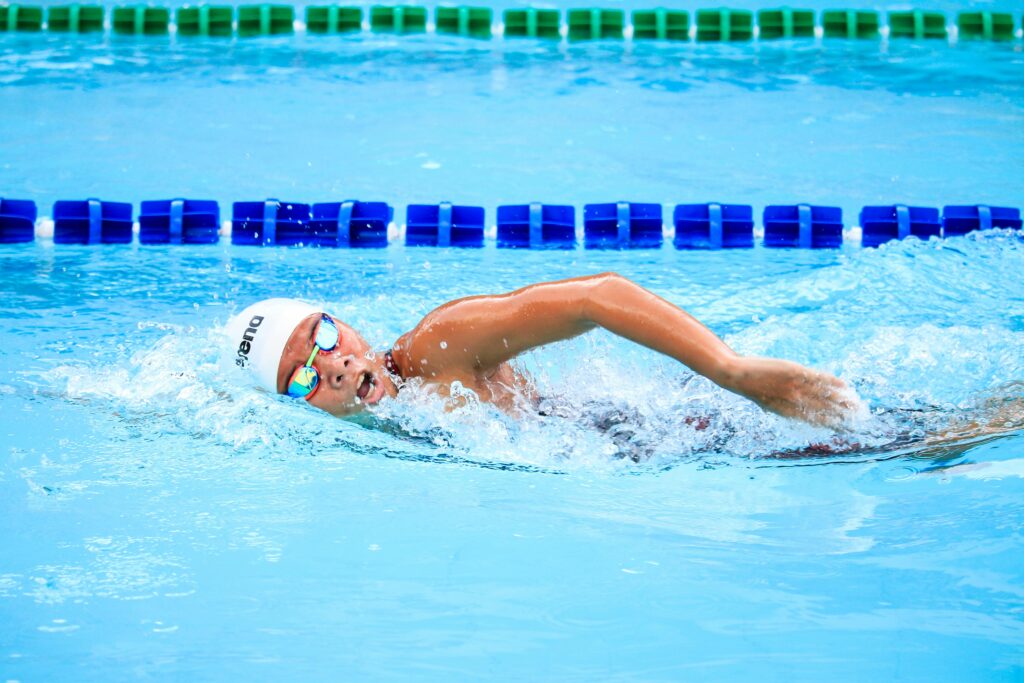
Yes, you can lose weight by swimming, but you have to follow the right guidelines to burn fat. Swimming is an aerobic exercise, and to burn fat, you need to swim between 60–80% of your maximum heart rate. If you do not maintain this range, you may not burn enough calories. If you exceed it, the exercise becomes anaerobic and you won’t be able to swim for long durations.
Some studies have found that people may gain weight instead of losing it. Professional swimmers may also have a higher body fat percentage compared to athletes at the same level. However, your goal is fat loss, and this can be achieved by maintaining the recommended heart rate.
How to Calculate Heart Rate for Swimming to Burn Fat?
Follow these two simple steps:
Step 1: Calculate Your Maximum Heart Rate
Subtract your age from 220. Example: If you are 25 years old, 220 − 25 = 195 BPM.
Step 2: Calculate Fat-Burning Heart Rate
To burn fat, maintain 60%–80% of your maximum heart rate. For 195 BPM, this equals 117–154 BPM. To maintain this heart rate, it is recommended to wear a heart rate monitor while swimming.
How to Lose Weight by Swimming?
Try swimming for 60 minutes, 5–6 days a week. If you are a beginner, start with 30 minutes, 3 days a week. As your breathing and swimming technique improve, gradually increase the duration and frequency.
Your goal should be to reach a fitness level where you can swim 20 laps without stopping. If you are already comfortable in the water, maintain the required heart rate and include interval swimming. For example, swim three laps continuously, followed by one slower lap. Take a 30-second break and repeat. Continue this pattern for 60 minutes to mobilize fat effectively.
5 Types of Swimming Strokes for Weight Loss
Swimming technique plays a vital role in burning fat. Incorrect technique can cause early fatigue and reduce calorie burn.
1. Freestyle Stroke (Front Crawl)
The freestyle stroke is one of the fastest and most commonly used strokes in competitions.
Freestyle Stroke Steps
- Float face down with your body flat and arms extended
- Pull one arm in a semicircular motion toward your thigh
- Recover the arm forward and re-enter the water with fingertips
- Turn your head sideways to breathe
- Alternate arms continuously
- Perform a flutter kick with relaxed ankles
2. Butterfly Stroke
The butterfly stroke, also called “fly,” is one of the most difficult but effective strokes for burning fat.
Butterfly Stroke Steps
- Float face down with arms shoulder-width apart
- Pull arms downward in a semicircular motion
- Recover both arms together above water
- Lift your chin to breathe as arms exit the water
- Keep legs together and perform dolphin kicks
- Use one small kick followed by a powerful kick
- Maintain an S-shaped body movement
3. Backstroke
Backstroke is slower than freestyle but effective and beginner-friendly.
Backstroke Steps
- Float on your back with arms extended overhead
- Move one arm in a semicircle underwater
- Alternate arms continuously
- Flutter kick to move forward
- Keep your body relaxed and aligned
4. Breaststroke
Breaststroke is also known as the “froggy stroke.”
Breaststroke Steps
- Float face down with arms extended
- Pull arms outward toward your chest
- Recover arms forward together
- Lift head to breathe
- Extend arms and submerge head
- Bend legs and kick backward
5. Sidestroke
Sidestroke improves coordination and is useful for water gymnastics.
Sidestroke Steps
- Float sideways with bottom arm extended
- Perform scissor leg movements
- Lead arm pulls water forward
- Trail arm pushes water downward
- Repeat rhythmically to move forward
Why Water Works for Weight Loss?
Water is approximately 800 times denser than air, creating resistance for every movement. Swimming requires pushing, pulling, and kicking against this resistance, increasing calorie burn and activating multiple muscle groups. Swimming boosts metabolism, continues calorie burn after workouts, reduces gravity pressure, and lowers the risk of injury, making it ideal for long-term weight loss.
Benefits of Swimming for Weight Loss:
- Improves cardiovascular health
- Reduces body weight and fat
- Lowers risk of diabetes, PCOD, and stroke
- Helps lower blood pressure
- Slows aging and improves appearance
- Enhances sleep quality
- Improves lung capacity
- Increases flexibility
- Reduces arthritis and gout pain
- Aids injury recovery
- Builds muscle strength and endurance
- Improves mood and relaxation
- Encourages social fitness
Useful Tip:
Add variety to your swimming routine by using fins, kickboards, and hand paddles to avoid boredom and improve performance.
What Your Swimming Kit Should Contain:
- Swimsuit
- Towel
- Bathing cap
- Swimming goggles
- Swim fins
- Nose clip
- Kickboard
- Water noodles
- Pull buoys
Caution:
Swimming may increase hunger after workouts, which can lead to weight gain. Keep healthy snacks ready and choose fiber-rich and protein-rich foods. Avoid sugary, fried, and processed foods.
FAQs:
Does swimming help weight loss?
Yes, swimming helps weight loss when done regularly at the correct intensity.
How long should I swim to lose weight?
Swimming 30–60 minutes, 3–6 days a week is effective.
Which swimming stroke burns the most fat?
The butterfly stroke burns the most calories, followed by freestyle.
Can beginners lose weight by swimming?
Yes, beginners can lose weight by starting slowly and increasing duration.
Is swimming better than walking for weight loss?
Swimming generally burns more calories and is easier on joints.